The Marketing Cues of Consumer Behavior and How to Use it for Your Business

This is a short preview of how the Consumer’s mind works and savvy Marketing Practitioners create Marketing Cues to increase Purchase Intention for their products!

Understanding the consumer mind starts with a simple premise:

We didn’t lose our ancestors’ minds!

Even though Humans have developed through evolution, we actually have kept all the previous brains (and minds thereof) that we used in the very far past.
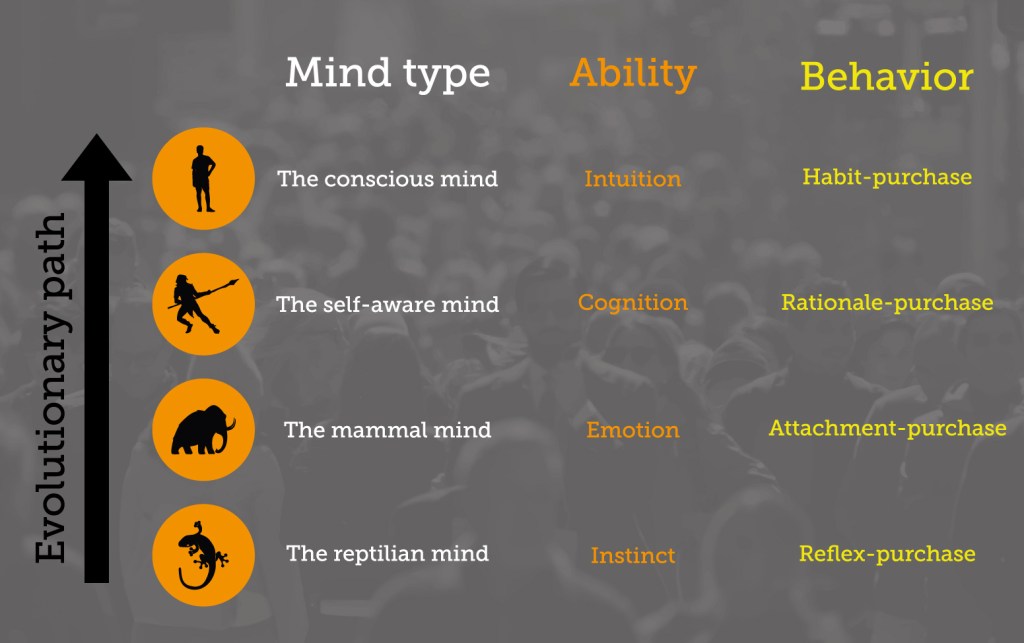
The Evolution of Mind and the Consumer Behavior Types

That’s what Consumer Evolution theory teaches us; The human mind is comprised of multiple evolutionary minds. Each is designed for a purpose and we use all of them daily! All that, so we can be highly sophisticated consumers that we are today!

The mental evolution is a survival mechanism – whether to fend of predators or to find nutritious food to prolong lifespan – the mind is pushing the envelope, always on the verge of new discoveries!

That’s why marketers study consumer behavior. We want to be part of your evolution!

I. Instinct – Reflexive Purchase

When the car fuel is low our INSTINCT kicks in and we are on a mini-mission searching for a gas station to refuel. This process is triggered by a small event and it bypasses the conscious mind.

At this level of mental activity, the consumer is faced with a simple need that is not fulfilled. It is usually an essential product to life or a commodity.

example of Instinct Purchases: food, fuel, heat, electricity, coffee, cigarettes, etc.

II. Intuition – Product Attachment

As mammals learned to socialize and use group strategy to survive, we started bonding with other creatures and forming attachment to our close family members, group leaders and attractive individuals. EMOTION capability meant that Humans are able to Attach Value to group members, ourselves and even object that resemble something/someone valuable.

Consumers, too, use Emotions in making Purchase Decisions. In fact, Emotions are one of the most powerful drivers (motivators) of Purchase Intention!

Certain brands, like Apple, have the consumers attached to their products (e.g. iPhone). Through consistent brand marketing and influencing consumer perception of their products, Apple has developed attachments and consumers seem to choose them over the competition because of the Attachment Values.

III. Cognition – Rational Decision Making

The next evolutionary step marked the beginning of the Golden Age of Human kind. As we were the most sophisticated mind alive, we thrived and reproduced in vast numbers!

When Humans became self aware, they have gain a new kind of mind the COGNITIVE mind. With it, we were able to invent the fire, cooking, clothes, tools, farming, warfare and so on.

Consumers decide between products and make rational decisions that lead to purchasing a product.

If you wish to buy a car, usually you would jot down some numbers to figure out your budget, then you’d search for cars you like, then compare them, and finally, call the distributor and try negotiate purchase conditions.

A monkey can’t do that.

Marketers know that consumers may be calculating and often strike them with offers that may help the consumer to choose their product, instead of that of the competition!

IV. Intuition – Forming Buyer’s Habits

Intuition is very much like Machine Learning. The basic workings of INTUITION is simple; it uses all the information stored in our mind (conscious and subconscious) to deliver best possible decisions!

Often confused with Instinct, Intuition is far more superior!

How do our hearts beat? or Lungs breath? There seems to be an Autopilot unit responsible for these actions. The same goes for Intuition, after walking for 20 years of your life, you no longer need to think about walking – You just DO!

Consumers exhibit Intuitive decision-making all the time. When you go to the supermarket to buy food products, you scan quickly the information and you quickly make a decision whether to place it in the Cart or not!

Habit, once developed, cannot be broken or even
changed easily. Think about all the bad
habits you are aware of and
yet you still do it!

Habit Buying allows the Consumer to think about other needs and desires for himself. Habits are often formed by sticking to a single vendor or a brand.

Consumer Habits are what Loyalty Programs are about! Just another way to get the consumer accustomed to using certain products and services.


How and When should Entrepreneurs and Small Businesses buy a Marketing Software Tool?

Looking for marketing software that will resolve some of you pain points?

Whether it’s an analytical tool, a task manager, a communication medium, or a fancy new CRM with many cool features, assuming that a new high-tech marketing solution is better than the old low-tech solution is extremely risky!

This article discusses the background of failure in transiting to a business model that uses a better technology. Finally, you will find 5 steps that, if done correctly, will lift your company to meet your desired objectives!

Normally, companies purchase marketing software to be independent of marketing agencies that are proving to be inefficient. Another reason is that companies wish to reduce the number of employees by placing Ai tools to do a better job for less money.

However, companies rush into this arrangement without conducting a multi-stakeholder analysis; without which it is not clear how it will affect the organization of the company as a whole, and therefore, if it will have a positive overall impact.

Adopting new tools might require your business model to adapt certain practices or even completely re-organize departments. That doesn’t go unnoticed and, more often than not, it backfires at management!

Some companies have reported that they’ve strayed from their initial go-to-market strategy as their new technology didn’t sync well with previous marketing strategies. The latter implies that there is still more to put in perspective prior to transit to a new-tech business model!

5 Steps all entrepreneurs and small business owners must follow when transiting to new technology:

1. Problem Statement

Review marketing strategies in and out with all teams to pinpoint weaknesses that need improvement by implementing a better processing system.

2. Brainstorm & Experiment

Try tweaking current (low-tech) solutions to solve the problem and address the pre-defined shortfalls with your IT.

3. Trial Phase

Find a technology that can solve the issue and put it to the test. Use the trial offer to resolve an on-going problem that low-tech solutions have failed to hammer out.

4. Optimization

Adapt marketing strategies to allow you to exploit the new-tech solution fully.

5. Measure ROI

Keep track of new conversions and consumer behavior.

Does Storytelling Help Entrepreneurs increase Profits?

In 2015, Hulten proved that Storytelling influences shoppers in shopping environment to increase purchase intention. This discovery resolved all queries on whether storytelling should be a formal part of marketing activities!

Storytelling is a great marketing advantage!!!

Storytelling definition

An effective means of external communication to transfer organizational culture and leadership styles to attract attention of consumers and promote participation.

Companies engage with target audience to inspire and motivate consumers to buy more and exhibit loyalty in the long run.

How can you implement Storytelling as a Marketing Action into your arsenal of outreach tools?

Enter: Narrative Advertisement

Narrative Ad is an Ad presented in the form of a story; this presentation has a different effect from other types of Ads. Consumers relate to the content with self-experiences – after receiving the external information – and create their self-identities.

In brand development, a brand contains cultural meaning and the functions of self and group identity. Thus, Storytelling aims to deliver brand value! Brand stories of enterprises help in strengthening positive brand association.

A Narrative is the basic mode of an organizational schema represented in the forms of language, paintings, dance movements and music.

Vivid stories enable consumers to imagine events and brand images in their minds. On one hand, we have the attention of the consumer; on the other hand, a conflict in the story gets the consumer emotionally involved. Think about Drama.

Narrative Ads, hence, influence people’s emotions, motivation, attitudes and, ultimately, purchase intention!

Narrative Ads must contain your product in them otherwise it won’t cause increased purchase intention!

How do your customers benefit from storytelling?

1. It is easier for them to understand the value contributed by your product.

2. It is easier to memorize the product brand and what it value it represents

3. They can relate to your story through personal experiences, which makes it easier to stay attentive.

So what’s the story behind your product?

Unstucking Small Business using CVP Business Models

Every now and then small businesses and entrepreneurs reach a bottleneck; they seem to experience a halt in revenues and questions are raised!

How to deal with stuck business models that seem to have had a short positive P-over-L lifespan (profit over loss)?

Is it just a bump in the road that small business owners have not anticipated, or a macro-economic trend that conspired against your business?

Questions are raised, and much can be deduced in the aftermath of economic crises and the insane growth of certain corporations, but can Small Business owners and entrepreneurs take control of the situation and turn the balance sheet around?

Short answer: YES!

Enter: Customer Value Proposition (CVP)

Customer Value Proposition is the essence of your business model that should be at the core of your operations. Although it may seem simple and straightforward, it is also the very reason that many startups fail!

This article will avoid the subject of how to develop a CVP for your business as it is a very complex subject that involves math and statistics. Nevertheless, you will know how to UNSTUCK your company using this brilliant TOOL.

Here’s HOW:

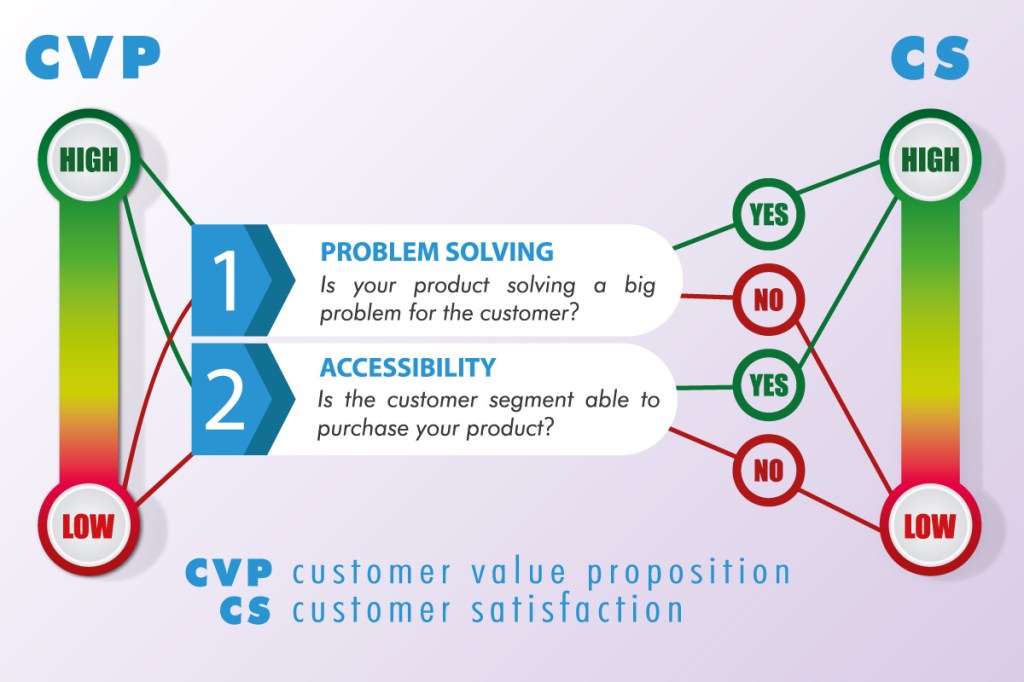
Simply ask yourself (and your upper management) two simple questions:

1. Is your product solving a big problem to your customer?

If you are not fixing a huge issue for your customer, or alleviate immense pain, your product won’t be valued much by the customer. As a consequence, your product is easily replaceable or devalued monetarily.

The premise of this question is to reflect on the basic relation between supply and demand – price and quality. PROBLEM SOLVING IS IMPORTANT!

2. Is the customer segment able to purchase your product?

Even if you are solving a big problem to your customers, the product could be too expensive, or not available on a local level.

Many customers are not able to buy your products
whether because it’s all sold out or too expensive!
Such positioning in the market opens the
door for a competitor with the capacity
to fill in the market gap.

Most corporations were once small companies that tapped enabled customers to buy their products. ACCESSIBILITY IS CRUCIAL!

How to raise your CVP?

1. Redefine your CVP

Ask yourself and most trustworthy managers the questions from above. Do whatever it takes to make the answers positive! That would set you up for a successful market conquest!

2. Flex your business model and company organization to meet the newly formed CVP

Once you have all agreed what needs to be the objective of your business model and following operations. It is time to formulate a plan of action and inform everyone of their new responsibilities and the supposed goal the company is pursuing!

IMPLICATIONS: Customer Satisfaction (CS)

Now that you have done it and your CVP is high. it is time it understand the implications of your action:

1. Mass relief and many happy customers

People are joyous! They love your product and their experience with you is so good that every customer is instantly transformed to a brand ambassador; going from friend to friend recommend you!

2. Your product is accessible financially and logistically

Your customers are buying your products everywhere they go! Customers no longer have to hassle to find what they need. It is simple, easy and anyone can buy your product at no inconvenience!

YOU ARE UNSTUCK!

You have secured the whole niche you were after. In doing so – you are able to understand your customers’ behavior better than anyone else – you have increased the profit per customer that was attainable from the market you have targeted.

Well done!

How To Successfully Connect with your Audience

Shortly, we will see a great pool of new ‘small’ influencers entering the marketing game and contributing to businesses through advertising, affiliating and promoting products to their small-sized audiences.

The year 2020 is the year of micro-influencers!

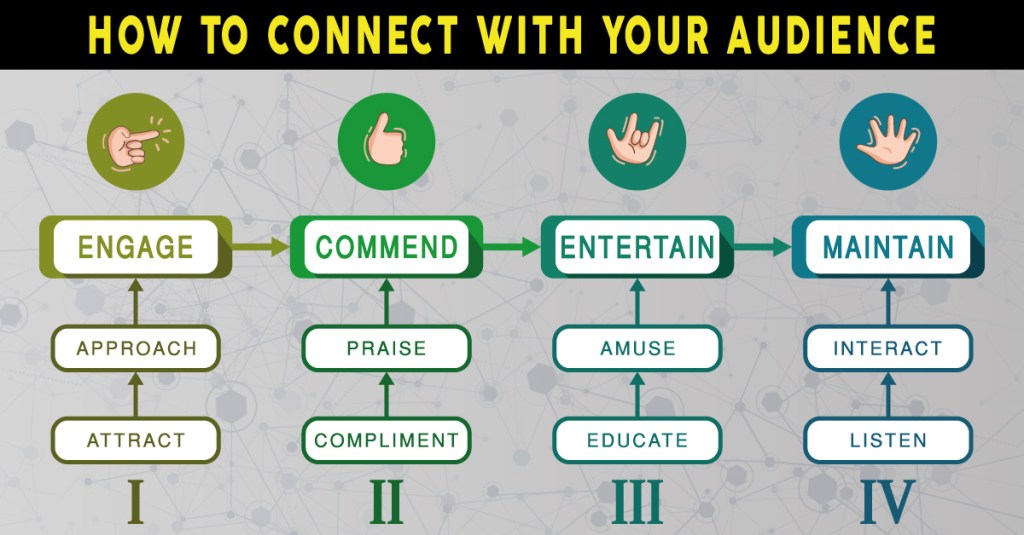
As an entrepreneur, you might want to jump in as well and influence your audience too! But, in order to achieve that, you must first CONNECT with your audience!

Luckily, there are steps that ensure the success of connecting with your audience. It may seem simple and straight-forward but it takes YEARS to get all the step right!

I. ENGAGE

First you need to understand your target market needs. Then develop solutions to their problems and alleviate pain for them through products you are marketing.

Once you have such a product, you will ATTRACT consumers toward your business.

If you don’t have a good product you won’t have any attraction by their side, and therefore your engagement will be weak!

Once you got this right, the next step is to APPROACH your consumers. Start by introducing yourself; who are you, what you do and most importantly why you do what you do!

II. COMMEND

Be kind, be charming and recognize you audience importance by paying them COMPLIMENTS. They will appreciate that behavior and you will have the opportunity to establish a meaningful relationship with them!

Now that you have the attention of your audience, DON’T WASTE IT RUSHING TO SELL STUFF RIGHT AWAY!!!

It isn’t enough to just compliment though, you must do your research on your audience. That way, you can understand what they go through, what troubles them and what they are good at doing. This is the perfect moment to address their qualities and giving them PRAISE that genuinely shows your understanding of their point of view!

III. ENTERTAIN

At this stage your audience is relaxed, happy to be in your presence and they listen to you attentively, ready to absorb the information coming from you.

Create an Outbound Marketing Plan; whether it’s an email campaign or adding them to your Social Media Page. If the previous steps were respected, you will have a high CTR (click through rate) which can lead them to your landing page.

It is best to use this opportunity to EDUCATE your audience about your products and how you can help them solve their problems and obtain value from purchasing your products.

Once they can relate to your product, make sure to leave the communication with a high-note!

AMUSE your audience here. It is important to develop their perception of you and your company as a virtual place of fun, happiness and entertainment!

IV. MAINTAIN

At this stage you will see increased sales conversions! So congratulations!

It’s highly likely that consumer will be happy with your products and leave you good reviews that will generate future revenues for you.

While reaping the benefits of your hard work, make sure to LISTEN to the feedback given by your audience.

There is a lot to learn from listening to what consumers actually think is good/bad about your product.

Finally, don’t wait! INTERACT with your audience and make sure they get what they want. If you just listen and do nothing, it translates to negligence and lack of customer care!

Be proactive and keep your audience
communicating back-and-forth with you!
That’s the best data you can gather!
Plus, your customer will respect you very much
for taking the time to tend to their needs!

Where Marketing and Faith meet

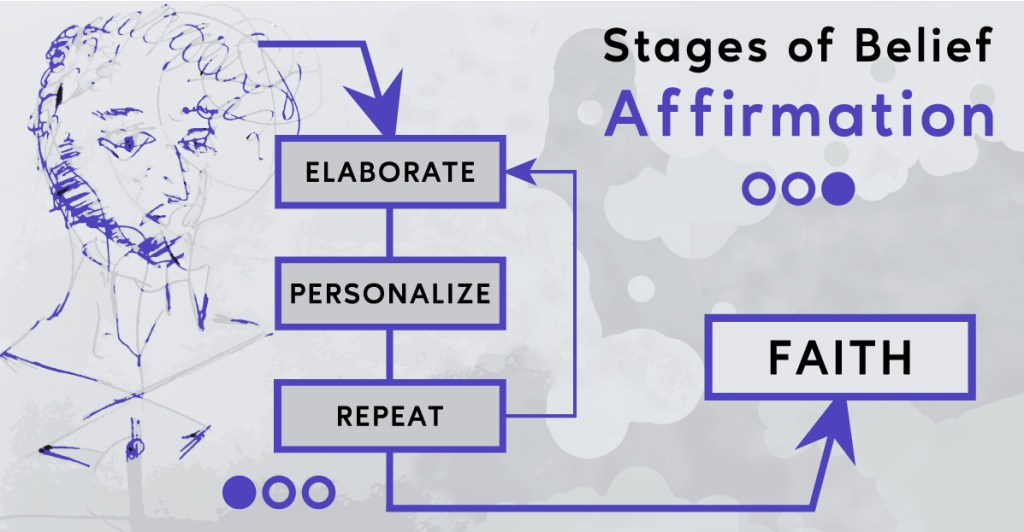
Faith is a big thing for us! It is the fundamental seed of all religions! How do Humans form faith? And does marketing profit from this aspect of human nature?

In behavioral marketing, we use the Placebo Effect to instill beliefs and expectations about the performance of our products. The effect encourages consumers to magnify product quality.

There is overwhelming evidence that suggests that perceived quality translates to experienced quality!

Faith does take time, but not too much. In fact, if nurtured right, any belief may become Faith in a matter of months!

Does marketing use this strategy to affirm your beliefs?

You bet!

Let’s take Apple’s iPhone as an example. Their famous moto (slogan) is “Think different.”

A powerful slogan that reflects their mission to be the technology that everyone will use in the future.

Clearly targeting the young generations, who naturally think differently and want to differentiate from previous generations, Apple has set their target mark and the Faith Marketing Campaign is on!

1. BELIEF ELABORATION

Individuals that chose Apple over any other competitors, found themselves to be Advanced, Open-minded and Forward-thinking! You can see how easy it is to Elaborate on this particular belief; as younger people are constantly searching for reasons to explain their creative, trendy and new behaviors.

2. BELIEF PERSONALIZATION

Once Apple has set the standard for Innovation, now it is time to allow the customer to personalize their products and experiences; to make it their own!

Each smartphone became special! Each customer was able quickly and easily to personalize their cell phones. The cell phone became their music and video player. It became their small on-the-way diary. It contained the background they like, the theme they liked and so on.

Truth is, there are no two iPhones that are similar. Every iPhone is different because of the user!

3. BELIEF REPETITION

Branding is all about shaping the perception of the consumer about a product. Apple did just that!

Branding reminded everyone how special and unique Apple was. So much so, that better products produced by competitors (at a cheaper price) still didn’t match the experience provided by Apple’s iPhone.

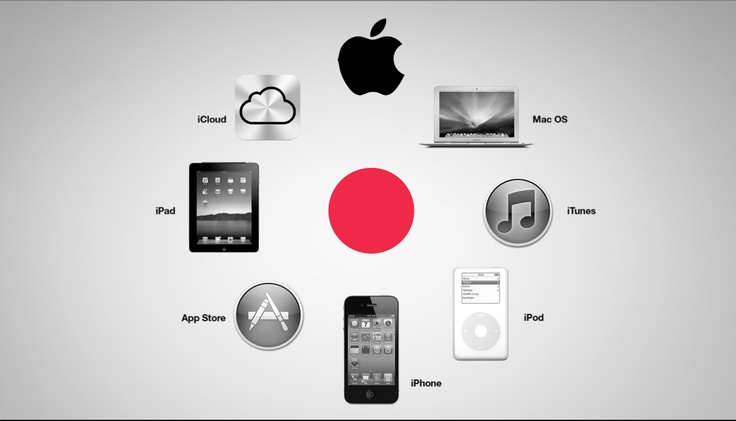
But that was not enough. To ensure that all customers attentively stick to the iPhone, Apple’s marketers decided it would be best to integrate all Apple’s devices and give the customer a wholistic experience over a multitude of devices. This seems as a great way for customers to access all their information and manipulate it with ease.

However, this is not the reason why Apple focuses on multi-device cross-integration. The real reason is that they were the only company offering such an experience. All other companies offered different devices that are not intrinsically paired to each other (e.g. SAMSUNG cell phone and TOSHIBA laptop are not paired).

They may not refer to it as “Faith” but I dare you choose another vendor!

The customer is forced to elect the same behavioral pattern and stick to Apple’s iPhone – repeating the purchase over and over and reaffirming it with other Apple’s devices, such as laptops and tablets.

Business Leadership for Entrepreneurs and Small Business Owners

Running a small business is a painstaking job. It is working over 12 hours daily, no weekends off and barely anytime to reflect on achievements and study macro-economic trends (world trade, currency exchange, labor markets, political relations).

Understanding macro-economic trends is crucial if you wish to establish a healthy leadership from an early start!

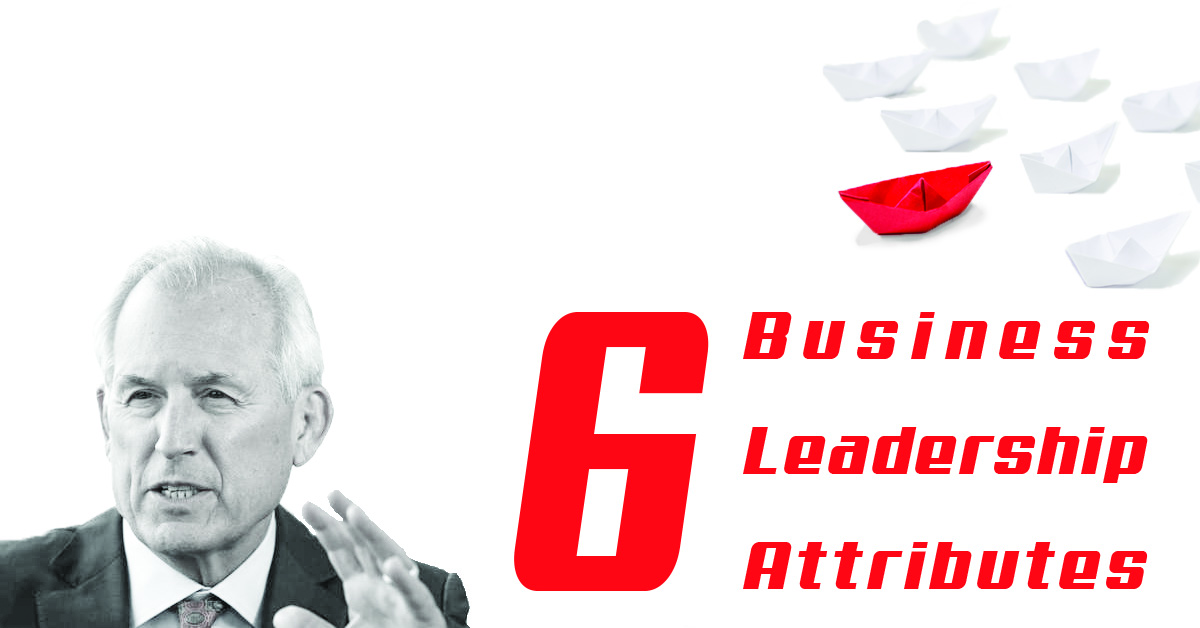
Many corporations know this! They appoint certain individuals whose job is to lead and push through external and internal obstacles. One of these great leaders is James McNerney.

According to James McNerney – CEO of Boeing from 2005 to 2015 – there are 6 Business Leadership Attributes that executives (and small business owners) need to embody:

1. Chart the course

2. Energize and inspire others

3. Demonstrate ethics, integrity and compliance

4. Deliver results

5. Raise the bar

6. Innovate resourcefully

Healthy leadership is the cornerstone of all successful professional organizations. It is the determinant of how will the organization consolidate internally and how will the organization deal with external opportunities/threats.

These attributes may seem simple to you, and somewhere generic, but that’s the very trap many not-so-brilliant fall into. Just like many small business owners that think they have it all figured it out, only to learn that they are missing one or more Leadership Attributes.

Keep your mind open and eyes wide. Don’t fall into the same trap!

I help entrepreneurs and small business owners

Working for many different employers in multiple industries, I was shocked to see many malpractices that stem from misunderstanding of marketing and business basics.

Dealing directly with big customers; Aldi, Starbucks, Philips, IBM, Microsoft, just to name a few, I received many complaints about our marketing approach and how it affected negatively the professional relationship we had.

Having a customer-centric approach, I set out to eliminate these errors!

Ali Sayyed enjoys work entrepreneur

As a B2C marketer I tended to big populations in USA, Europe and Asia. I built CRM management systems for our consumers and studied behavior extensively. It came to my knowledge that as Analytics go, we have just discovered the tip of an iceberg!

In the pursuit of the short-term profit, we sacrifice our long-term prosperity!

Although learning through complaints is not my favorite way of absorbing new knowledge, it did teach me quite a lot, especially the hard-to-grasp, subtle and delicate parts of marketing in which companies shamelessly and persistently fail.

It’s not to say that it is easy to implement the right practices. However, implementing them will assure a better future for you business!

If you are an entrepreneur or running a small business and looking to expand, you will find my blog very helpful!

Design a site like this with WordPress.com
Get started